
Innolux G156HCE-L01
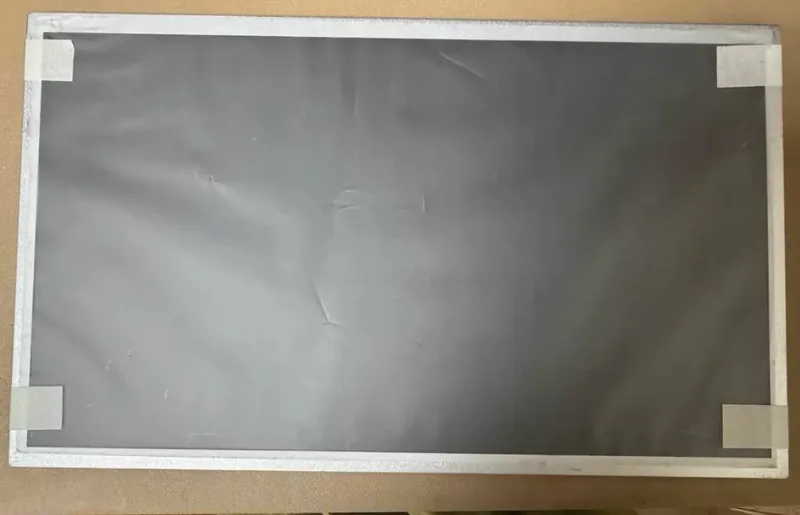
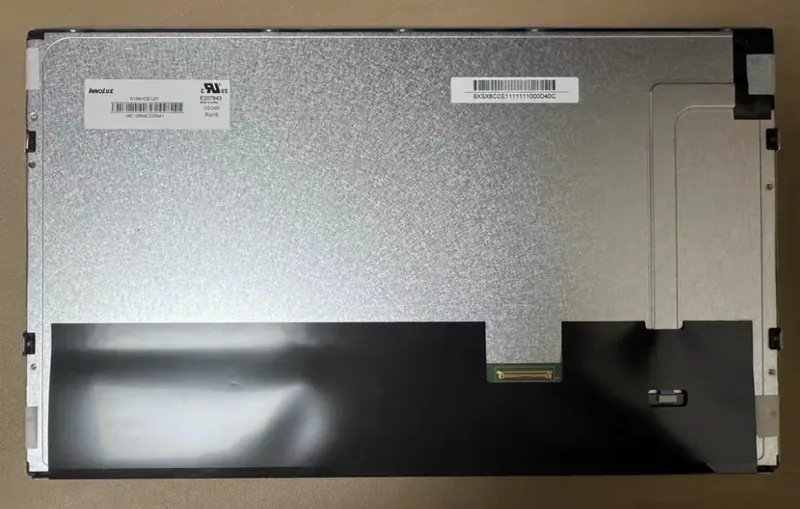
Innolux G156HCE-L01 is a 15.6 inch, 1920 × 1080 FHD, WLED backlight, 40-pin 2ch-LVDS, 450nits, AAS wide-viewing-angle, -30°C~85°C wide-temperature industrial LCD module with an 800:1 contrast ratio, for industrial HMI.
Key parameters
| Panel maker | Innolux |
| Model | G156HCE-L01 |
| Category | LCD module |
| Size | 15.6″ |
| Resolution | 1920 × 1080 FHD (16:9) |
| Interface | 40 pins 2ch-LVDS |
| Brightness | 450 cd/m² (typ., min 360) |
| Connector | 40-pin 2ch LVDS |
| Operating temp. | -30 to 85 °C |
| Backlight | WLED |
| Contrast | 800:1 (typ., min 600) |
| Viewing angle | 89° (CR≥10, per side, typ.) |
| Colour gamut | 72% NTSC (typ.) |
| Colour depth | 16.7M (8-bit) |
| Surface | AG anti-glare, 3H hard coating |
| Backlight drive | Built-in converter — 12 V input (10.8–13.2 V), 1.0 A typ. |
| Backlight life | 50,000 h (estimated, 25 °C) |
| Power | 16 W typ. (cell 4 W + backlight 12 W) |
| Outline | 363.8 × 215.9 × 9.3 mm |
| Weight | 1055 g (typ.) |
| Storage temp. | -40 to 90 °C |
| Spec status | Approval Specification Ver 2.4 (2023-08) |
Sourcing notes
Before quoting G156HCE-L01, please provide the full suffix (L01 for this part), version code, label photo, target quantity, grade requirement and destination country. The datasheet is Approval Specification Ver 2.4 (Aug 2023) — an approved release rather than a tentative one, though the batch label should still be checked before volume orders.
The interface is 40-pin 2ch-LVDS: confirm the dual-channel mapping and the 30/40-pin adapter on the host board. The backlight converter is built in — 12 V LED_Vin (10.8–13.2 V), 1.0 A typ., 12 W — so the system only supplies 12 V plus EN/PWM, no external constant-current driver.
Where this panel is used
- Cold-start and wide-temperature equipmentThe −30 to +85 °C operating window is the reason to shortlist this part. Standard commercial panels are rated 0-50 °C: below freezing they either refuse to start or lose response time badly enough to look like a dead driver board. Wide-temperature modules are built for refrigerated display, vehicle-mounted terminals, outdoor cabinets and equipment that has to boot on a winter morning.
- Vehicle-mounted and ruggedised terminalsIn-cab displays, agricultural and construction machinery, and ruggedised field terminals. Vibration and shock dominate the qualification here rather than temperature alone: the module has to survive the mounting bracket resonating. Ask for the shock and vibration ratings in the datasheet and match them to the vehicle class before you commit, and specify a locking connector on the harness side.
- Industrial HMI and machine-side panelsMachine, packaging-line and test-bench HMI. On a 15.6-inch diagonal, a 1920 × 1080 FHD canvas fits an alarm banner, a trend curve and a recipe panel on one screen, which is what operators actually need at arm's length. These cabinets are hostile to displays — vibration, 25-40 °C internal air, continuous duty for years — so mount the module on standoffs and keep the rear air gap that the mounting drawing specifies.
- Medical imaging and patient-monitor consolesDiagnostic viewers, ultrasound carts and bedside monitors. These run all day at a fixed backlight, so what matters is colour stability over thousands of hours and a uniform panel rather than a bright one. If the device needs a specific greyscale response or a DICOM-calibrated curve, that is a system-level calibration job — the panel supplies the stable, uniform source for it.
Matching it to your platform
- Channel count and pin countLVDS modules come as single-channel (40 pin is common) or dual-channel (often 51 pin). A cable built for one will not seat on the other, and the host transmitter has to drive the same number of pairs. Confirm both before the harness is made.
- VESA or JEIDA mappingThe two pinout families assign the data pairs differently. Feeding a VESA-mapped panel with a JEIDA-mapped transmitter produces a recognisable colour-shifted image rather than no image, so it is easy to misdiagnose as a panel fault.
- DE-only or separate syncMost industrial LVDS panels run in DE-only mode: Hsync and Vsync have to be tied low or grounded at the host. Feeding separate sync into a DE-only panel gives an unstable or rolling picture.
- Backlight drive and PWMCheck whether the boost converter sits inside the module. If it does, the panel takes a raw DC rail and you do not add a constant-current board — doubling up the driver is a common way to destroy a backlight. Confirm the PWM dimming frequency the converter expects.
- Mechanics and outlineOutline, screw bosses, ear position and FPC exit direction all have to line up with the existing chassis. Compare the mechanical drawing against the mounting surface and hole pitch before tooling anything — this step catches more mismatches than the connector does.